 Save
Save There's something about the smell of vegetables caramelizing in a hot oven that stops you mid-afternoon. I discovered this soup completely by accident one October when my farmer's market haul was getting ahead of me, and I couldn't decide what to make. Roasting everything seemed like the path of least resistance, but the moment those carrots and bell peppers turned golden and sweet, I knew I'd stumbled onto something that would become a weeknight staple. The magic isn't in complexity, it's in letting the oven do what it does best.
I made this for my sister during her first week in a new apartment, when her kitchen was still mostly empty boxes. She took one spoonful and got quiet in that way people do when food hits exactly right, and I watched her shoulders relax. That's when I understood this soup isn't just nourishing, it's the kind of thing you make for people you want to feel better, whether they're sick or overwhelmed or just tired from life.
Ingredients
- Carrots: Two medium ones, peeled and chopped into roughly one-inch pieces so they roast evenly and get gorgeously caramelized on the edges.
- Sweet potato: One medium, peeled and diced into cubes similar in size to the carrots, which brings natural sweetness and creaminess to the finished soup.
- Red bell pepper: One, seeded and chopped, adding brightness and a subtle sweetness that balances the earthier vegetables beautifully.
- Zucchini: One, chopped into chunks, which softens completely during cooking and creates a silky mouthfeel when blended.
- Red onion: One medium, peeled and quartered, turning jammy and sweet as it roasts rather than harsh and sharp.
- Garlic: Two cloves, peeled whole, which mellows considerably in the oven and becomes almost buttery.
- Olive oil: Two tablespoons for tossing the vegetables before roasting, helping them caramelize and preventing sticking.
- Vegetable broth: Four cups of good quality broth, which becomes the silky base for everything else and should taste good enough to sip on its own.
- Dried thyme and rosemary: One teaspoon of each, adding warmth and depth that ties all the roasted flavors together.
- Smoked paprika: Half a teaspoon, which adds subtle smokiness without overpowering and gives the soup a sophisticated finish.
- Salt and black pepper: To taste, added in layers during roasting and after blending for the best flavor development.
Tired of Takeout? 🥡
Get 10 meals you can make faster than delivery arrives. Seriously.
One email. No spam. Unsubscribe anytime.
Instructions
- Heat your oven and prep the sheet:
- Set the oven to 425°F and line a large baking sheet with parchment paper. This high heat is crucial because it creates caramelization, not just softening, and the parchment makes cleanup effortless.
- Toss everything together:
- Arrange all the chopped vegetables and whole garlic cloves on the prepared sheet, drizzle with olive oil, then sprinkle the thyme, rosemary, smoked paprika, salt, and pepper over everything. Toss with your hands until every piece glistens with oil and is evenly coated with seasonings.
- Let them get golden:
- Slide the sheet into the oven for 30 to 35 minutes, stirring halfway through so nothing sticks or burns. You're looking for the vegetables to turn golden brown at the edges and be completely tender when pierced with a fork.
- Build the soup:
- Transfer all the roasted vegetables into a large pot, scraping up any caramelized bits stuck to the pan because that's pure flavor. Pour in the vegetable broth and bring everything to a gentle simmer over medium heat, letting it bubble softly for about 10 minutes so the flavors marry together.
- Blend until silky:
- Using an immersion blender, puree the soup right in the pot, working in batches if needed, until it's completely smooth and velvety. If you prefer using a regular blender, work carefully with hot liquid and do this in batches, holding the lid with a towel as you blend.
- Taste and serve:
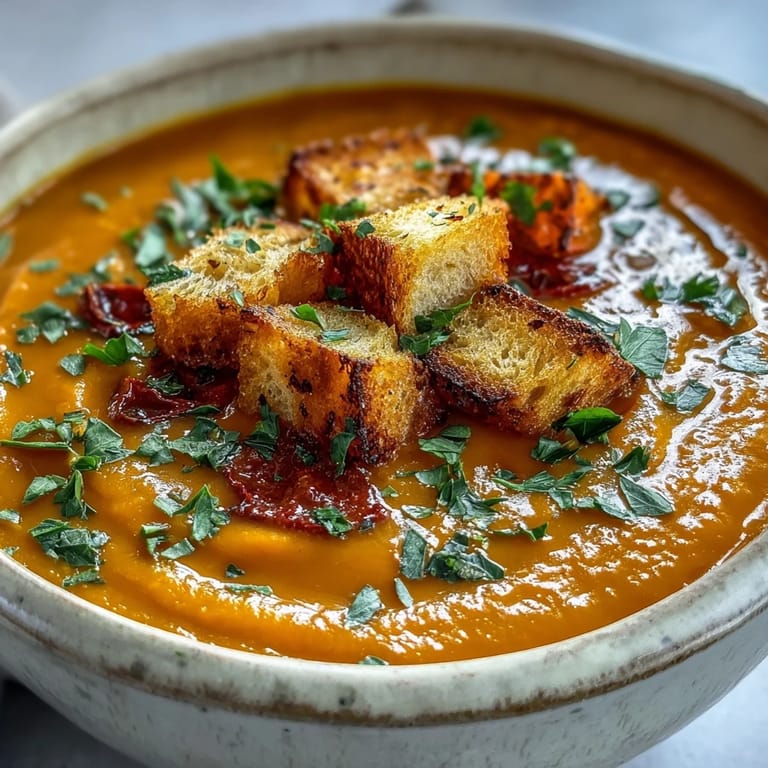
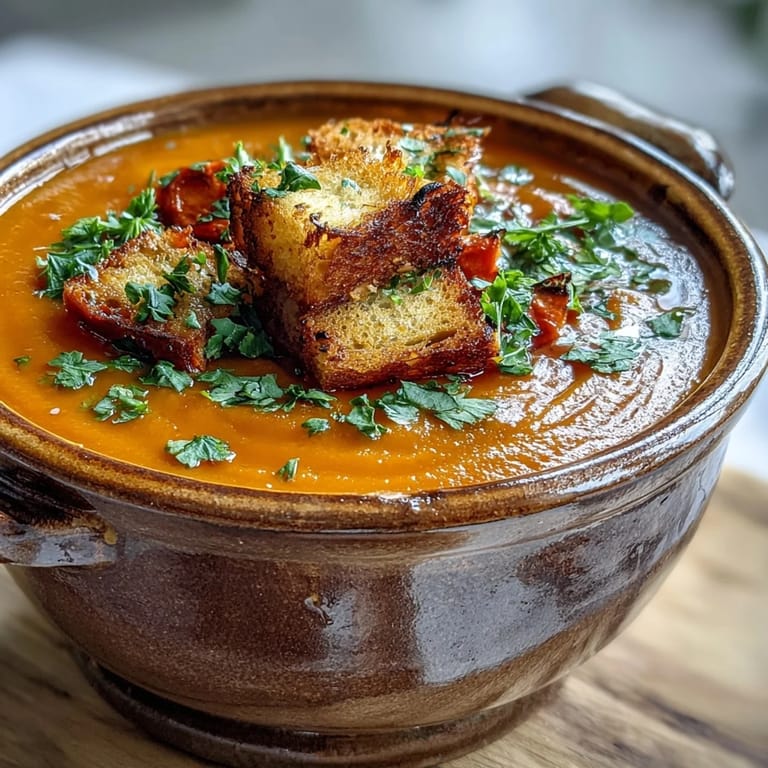
- Give the soup a final taste and adjust the salt, pepper, and seasonings to your preference. Ladle into bowls and finish with a small handful of fresh parsley, a drizzle of good olive oil, and croutons or toasted seeds if you like the textural contrast.
 Save
Save My neighbor once asked me why I'd made soup in the middle of summer, and I realized that while this tastes like autumn in a bowl, it's actually just as welcome when you want something warm and grounding on any day that feels uncertain. That's when I stopped thinking of it as a seasonal recipe and started keeping the ingredients handy year-round.
The Power of Roasting
Roasting vegetables before they go into the pot transforms them completely. Instead of boiling away their identity into a bland broth, you're concentrating their sugars and creating new flavors through the Maillard reaction, that magical browning process that makes food taste richer and more complex. The difference between boiled vegetable soup and roasted vegetable soup is honestly the difference between a forgettable bowl and something you crave.
Make It Your Own
The beauty of this soup is that it's a template, not a rule. Whatever is in season or languishing in your crisper drawer can take a place on that roasting sheet. I've made it with parsnips instead of carrots, added butternut squash, included leeks, experimented with different herbs, and each version feels both familiar and new. The core technique stays the same, but the personality of the soup shifts with what you choose.
- For a creamy version, stir in a splash of coconut milk or heavy cream just before blending.
- Try swapping the paprika for cumin or curry powder if you want to take it in a completely different flavor direction.
- This soup keeps beautifully in the refrigerator for three days and freezes wonderfully for up to three months.
Texture and Consistency
Some people love their soup completely smooth like silk, while others prefer a bit of texture you can chew. I've learned that an immersion blender gives you more control because you can stop whenever it feels right to you, whereas a countertop blender is all or nothing. There's no wrong answer here, just personal preference.
 Save
Save This soup reminds me why simple cooking is often the best cooking, letting good ingredients and patient technique shine without unnecessary fuss. Make it whenever you need comfort, whenever you have vegetables on hand, whenever you want something that tastes like care in a bowl.
Recipe FAQs
- → Can I use different vegetables in this soup?
Absolutely! Swap in any seasonal vegetables such as parsnips, butternut squash, leeks, or cauliflower. Root vegetables work particularly well as they caramelize beautifully when roasted.
- → How can I make the soup creamier?
For extra creaminess, stir in a splash of coconut milk, heavy cream, or cashew cream before blending. This adds richness without overpowering the roasted vegetable flavors.
- → Can this soup be made ahead of time?
Yes! This soup stores beautifully in the refrigerator for up to 3 days. You can also freeze it for up to 3 months. Reheat gently on the stovetop, adding a splash of broth if needed.
- → What's the best way to reheat leftover soup?
Reheat gently on the stovetop over medium-low heat, stirring occasionally. If the soup has thickened, add a bit of vegetable broth or water to reach your desired consistency.
- → Do I need a special blender for this soup?
An immersion blender works perfectly and makes cleanup easy. Alternatively, use a regular countertop blender in batches. Just be careful with hot liquids and blend with the lid slightly vented.
- → Why roast the vegetables instead of just boiling them?
Roasting caramelizes the natural sugars in vegetables, creating deeper, more complex flavors and bringing out their natural sweetness. This step transforms simple vegetables into a rich, flavorful base.