 Save
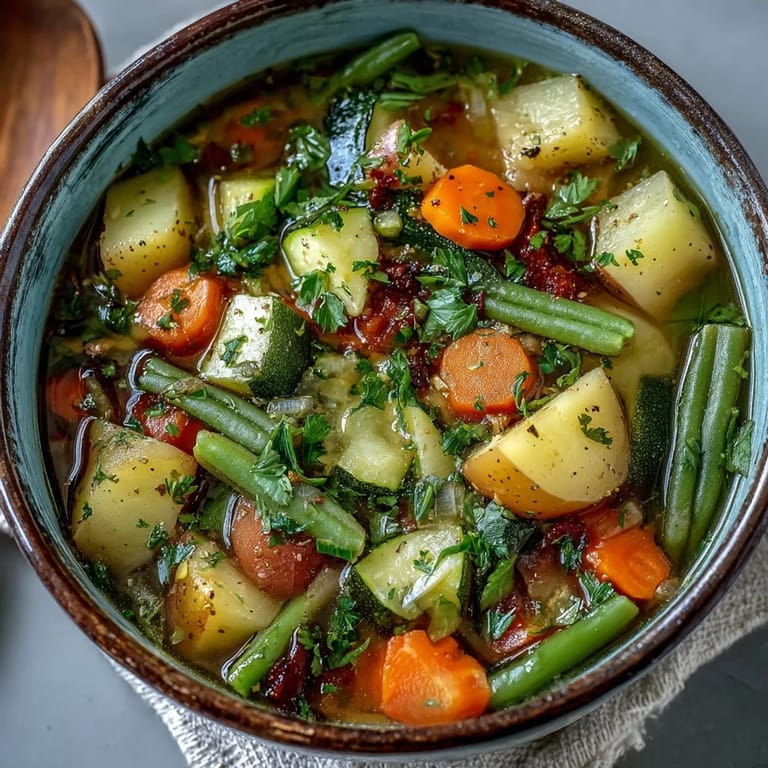
Save My kitchen window faces the farmer's market parking lot, and I watch people trudge in with their canvas bags every Saturday morning looking for exactly this: a reason to cook something warm and alive with vegetables. That's when this soup became my answer—thrown together on a Tuesday night when I had a refrigerator full of half-used vegetables and absolutely nothing clever to prove. What started as pure practicality turned into the dish I make whenever someone needs comfort without fuss, or when I need to remember that the simplest meals often taste the best.
I made this soup for my neighbor when her daughter was sick, and she still texts me about it three years later. There's something about a bowl of vegetables that just fits into people's lives at exactly the right moment—no pretense, no complications, just care in every spoonful.
Ingredients
- Potatoes (3 medium, peeled and diced): These are your soup's backbone, and dicing them evenly means everything cooks at the same pace instead of some pieces turning to mush while others stay firm.
- Carrots (2 medium, peeled and sliced): Their sweetness balances the earthiness, so don't skip them even if you think you don't like carrots—you will in here.
- Celery stalks (2, diced): The flavor foundation that barely gets credit but absolutely deserves it, adding a subtle savory note that makes people ask what the secret ingredient is.
- Onion (1 medium, chopped): This becomes silky and sweet after sautéing, creating the base that everything else builds on.
- Zucchini (1, diced): A summer vegetable that adds lightness and soaks up flavors without overwhelming the pot.
- Green beans (1 cup, cut into 1-inch pieces): They stay bright and slightly tender-crisp if you add them with the potatoes, which gives the soup nice textural variety.
- Garlic (2 cloves, minced): Smells incredible once it hits the hot oil, and transforms the whole flavor profile from flat to full-bodied.
- Vegetable stock (6 cups): The liquid foundation, so use something decent—homemade is always best, but a good quality store-bought version absolutely works.
- Bay leaf (1): Non-negotiable, as it quietly deepens everything and comes out before serving.
- Dried thyme and parsley (1 teaspoon each): These herbs are understated but essential, creating warmth without shouting.
- Salt and black pepper (1 teaspoon salt, ½ teaspoon pepper): Taste as you go because every vegetable stock is different, and you want to season to your liking.
- Olive oil (2 tablespoons): The foundation for sautéing, creating a flavor base that raw oil would never accomplish.
- Frozen peas (1 cup): Added near the end so they stay bright green and tender instead of turning murky and soft.
- Fresh parsley (for garnish, optional): A small handful sprinkled on top brings a fresh pop that completely changes how the soup feels.
Tired of Takeout? 🥡
Get 10 meals you can make faster than delivery arrives. Seriously.
One email. No spam. Unsubscribe anytime.
Instructions
- Warm your pot and build the flavor base:
- Heat the olive oil in your large pot over medium heat and add the onion, carrots, and celery—you'll hear them sizzle immediately. Let them soften for about 5 minutes, stirring occasionally, until the kitchen fills with that golden, savory smell that tells you you're doing this right.
- Wake up the garlic:
- Add your minced garlic and cook for just 1 minute, stirring constantly so it releases its aroma without burning. That sharp fragrance is your signal to move forward.
- Add the potatoes and remaining raw vegetables:
- Stir in the diced potatoes, green beans, and zucchini, cooking for 2 minutes while stirring gently. You're just coating everything with the oil and heat before the liquid comes in.
- Pour in the stock and seasonings:
- Add your 6 cups of vegetable stock along with the bay leaf, thyme, parsley, salt, and pepper, stirring everything together. The broth should cover the vegetables by about an inch.
- Let it simmer until vegetables are tender:
- Bring the soup to a boil, then reduce the heat and cover the pot, letting it simmer for 20-25 minutes until the potatoes are fork-tender and the carrots have softened. You'll know it's ready when you can easily break a potato piece between your thumb and finger.
- Finish with the peas and final touches:
- Stir in the frozen peas and cook for 2-3 minutes more, then remove the bay leaf. This moment is when the soup suddenly becomes complete, like everything was just waiting for those bright peas to arrive.
- Serve with intention:
- Ladle the soup into bowls, sprinkle fresh parsley on top if you have it, and carry it to whoever needs it. Hot soup is always better eaten immediately.
 Save
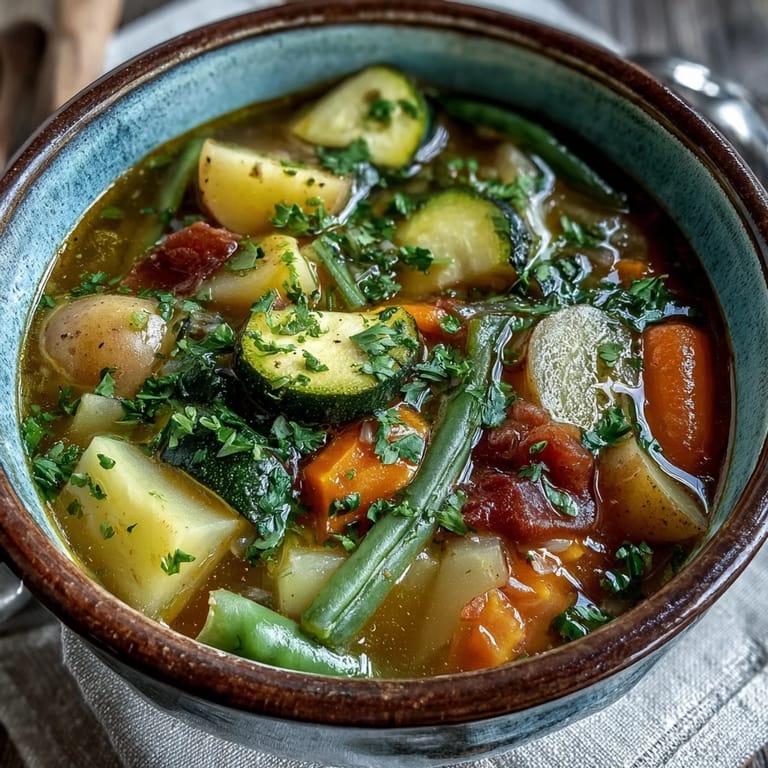
Save My partner came home from a terrible day at work, and I watched them take a spoonful of this soup and actually pause—their shoulders dropped, and they stopped checking their phone. That's when I realized this wasn't just dinner, it was a small act of goodness in bowl form.
When Vegetables Matter Most
The beauty of this soup lives in its flexibility, not its rigidity. Corn works wonderfully when zucchini isn't at its peak, spinach wilts in beautifully during the last few minutes, and kale adds an earthiness that feels sophisticated without trying. The season dictates what you use, and the soup adapts without complaint.
Making It Richer or Lighter
If you want to push this toward comfort and indulgence, a splash of cream or a handful of grated cheese stirred in just before serving transforms it into something almost luxurious. For keeping it light and clean, the soup as written is complete and satisfying, letting the pure flavors of vegetables shine without any heaviness.
Building Meals Around This Soup
This isn't a soup that demands accompaniments, but it absolutely welcomes them. Serve it alongside crusty bread for dipping, or pair it with a simple green salad if you want something more complete on the plate. For vegan meals, just verify your stock is vegan and skip any cream or cheese additions, and everything remains vibrant and nourishing.
- Tear bread into chunks and let them soak up the broth instead of eating them on the side.
- Make a double batch and freeze half in containers for those mornings when cooking feels impossible.
- Add this to your weekly rotation and watch how people start asking if you're becoming a chef.
 Save
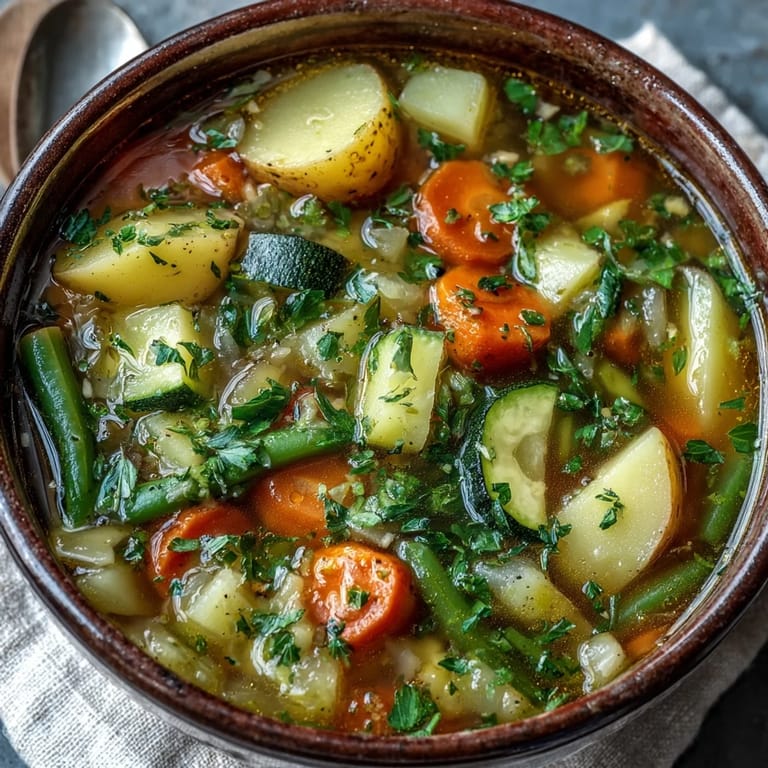
Save This soup reminds me that the best cooking happens when you stop overthinking and just let vegetables do what they do best. Make it tonight, or tomorrow, or whenever someone in your life needs something warm that proves someone cares.
Recipe FAQs
- → Can I use different vegetables in this soup?
Absolutely! Feel free to swap in seasonal favorites like corn, spinach, kale, or butternut squash. The base works well with most vegetables that have similar cooking times.
- → How can I make this soup creamier?
For added richness, stir in a splash of heavy cream, coconut milk, or a handful of grated cheese just before serving. You can also blend a portion of the soup for a thicker texture.
- → Can I prepare this soup ahead of time?
Yes! This soup stores well in the refrigerator for up to 4 days and actually tastes even better the next day as the flavors meld. Reheat gently on the stovetop.
- → Is this soup freezer-friendly?
It freezes beautifully for up to 3 months. Cool completely before transferring to airtight containers. Thaw overnight in the refrigerator and reheat on the stovetop.
- → What can I serve with this soup?
Crusty bread, garlic toast, or a simple green salad make excellent accompaniments. For a heartier meal, serve alongside grilled cheese sandwiches or a grain salad.
- → How do I ensure the vegetables cook evenly?
Cut all vegetables into uniform, bite-sized pieces. Add harder vegetables like potatoes and carrots first, then softer ones like zucchini and peas toward the end of cooking.