 Save
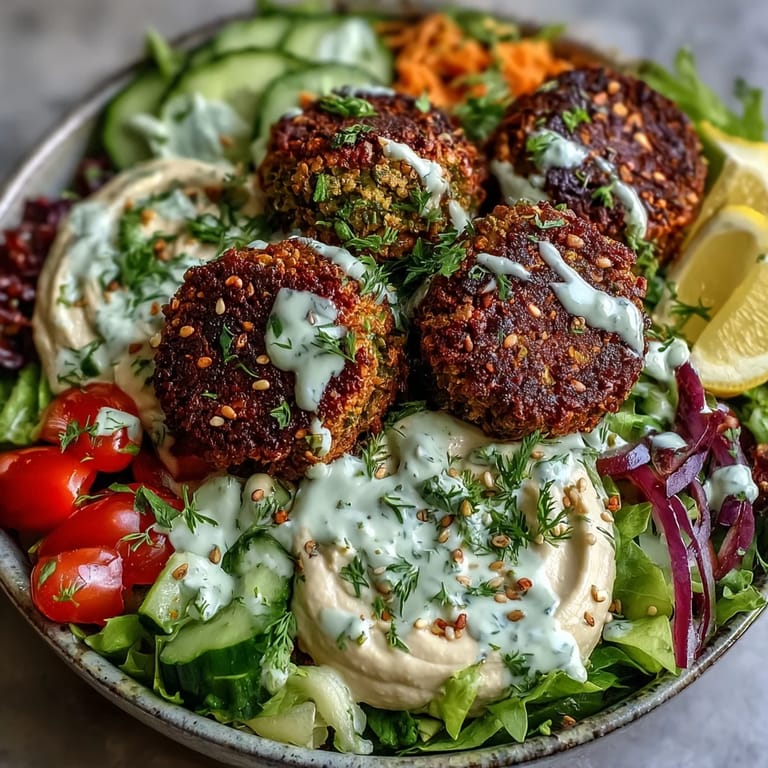
Save There's something about a falafel bowl that makes you feel like you're sitting at a tiny Mediterranean café, even if you're eating at your kitchen counter. My friend Leila brought one to a potluck last summer, and I watched people go back for seconds without hesitation. What struck me most wasn't just how good it tasted, but how the crispy falafel stayed crunchy even when draped in creamy hummus and tzatziki. That moment made me realize this wasn't just a salad—it was a whole experience built on contrasts.
I made this for my roommate on a Tuesday night when she came home exhausted from work, and she actually paused mid-bite to say, "This tastes like someone cares." That's the real magic here—it looks intentional and celebratory without requiring you to spend hours in the kitchen. She asked me to make it again the following week, which is how I knew I'd stumbled onto something special.
Ingredients
- Store-bought or homemade falafel (12 balls): These are your textural anchor, so choosing quality matters—they should be dense enough to stay crispy when warm but tender inside where it counts.
- Hummus (1 cup): This acts as both a flavor base and a protective layer that keeps your greens from getting crushed while your falafel stays crunchy on top.
- Tzatziki (1 cup): The cooling contrast to everything else, and honestly, it's worth making or finding a good version because it makes the whole bowl feel balanced.
- Tahini sauce (1/4 cup): Drizzle it last so it catches the light and reminds you that simple ingredients can be genuinely delicious.
- Mixed salad greens, such as arugula, spinach, or romaine (4 cups): The bed everything sits on—choose what you actually enjoy eating because this isn't the time to suffer through greens you don't like.
- Cherry tomatoes, halved (1 cup): They burst slightly when you bite them, releasing tiny pockets of sweetness that cut through the richness of the spreads.
- Cucumber, sliced (1/2 cup): Keep these cool and crisp by slicing them just before assembly, and don't peel them unless you prefer the softer texture.
- Red onion, thinly sliced (1/4 cup): A little sharpness goes a long way, so slice thin and don't feel guilty about using less if raw onion isn't your thing.
- Shredded carrots (1/4 cup): These add natural sweetness and a satisfying crunch that rounds out the texture spectrum.
- Fresh parsley, chopped (2 tablespoons): Not just decoration—the herbaceous flavor lifts everything else and makes it taste fresher than it actually is.
- Toasted sesame seeds (1 tablespoon): Toast them yourself if you have time because the aroma that fills your kitchen is worth the three minutes it takes.
- Lemon wedges: Serve these on the side so people can squeeze them right before eating, which brightens all the flavors at the last second.
Tired of Takeout? 🥡
Get 10 meals you can make faster than delivery arrives. Seriously.
One email. No spam. Unsubscribe anytime.
Instructions
- Warm your falafel:
- If using store-bought, follow the package instructions—usually this means a few minutes in the oven or a quick pan-fry until they're golden and heated through. Homemade falafel should be cooked however your recipe indicates, then set aside somewhere warm.
- Build your creamy base:
- Scoop a generous dollop of hummus onto each bowl and swirl it around the bottom, then do the same with tzatziki, letting them mingle slightly but not completely. This creates pockets of flavor that change with every bite depending on how much you pick up.
- Arrange your greens and vegetables:
- Layer your mixed salad greens over the spreads, then scatter the cherry tomatoes, cucumber slices, red onion, and shredded carrots in a way that feels natural to you. There's no wrong way to do this—just make sure everything gets distributed so someone getting each spoonful experiences all the flavors together.
- Crown it with falafel:
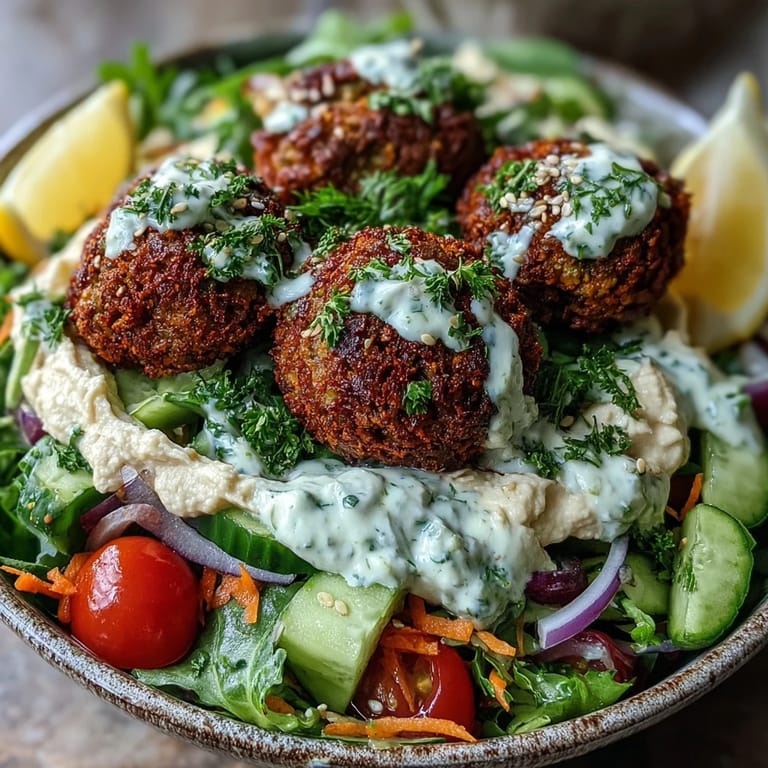
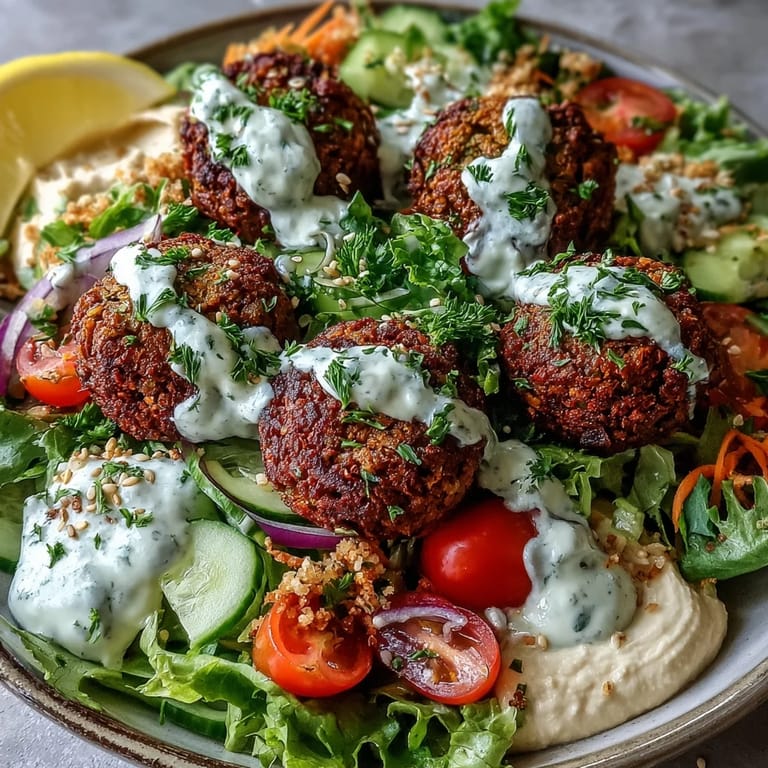
- Place three falafel balls per serving right on top of the vegetables where they sit up proud and stay crispy. This positioning is important because they're the star and deserve to stay as crunchy as the moment they finished cooking.
- Finish with sauce and garnish:
- Drizzle your tahini sauce in a thin stream across the top, then sprinkle with fresh parsley and toasted sesame seeds. Add a lemon wedge on the side and serve immediately so everything tastes like it was made just for eating right now.
 Save
Save My neighbor brought over a falafel bowl when my kid was sick, and I realized that food like this—built with care and layers of flavor—is how people say "I'm thinking of you" without needing words. That bowl sat on the kitchen counter as a small act of kindness that tasted incredible, and that's when I understood why this recipe matters.
The Texture Secret Nobody Talks About
The real reason this bowl works is because every element has a different texture, and your mouth stays interested the whole way through. The creamy spreads, the crispy falafel, the fresh crunch of vegetables, the tender leaves—it's like a symphony where nothing clashes and everything amplifies everything else. This is why people keep coming back for more even when they're full.
Customizing Your Bowl
This bowl is genuinely flexible, which makes it perfect for cooking with people who have different tastes or dietary needs. You can swap in pickled vegetables for fresh ones, add cooked quinoa or rice for substance, skip the tzatziki for a vegan version, or toss in kalamata olives if you want more briny depth. The core idea stays the same—you're creating a bowl where crispy meets creamy meets fresh, and everything supports everything else.
Making This Feel Like a Meal
A falafel bowl is technically a salad, but the falafel and the generous spreads make it feel hearty enough to be a full meal without any apologies. If you're still worried about substance, stir cooked brown rice or quinoa into your spreads before arranging everything else—it disappears into the creamy layer and adds staying power. Pair it with a crisp white wine or mint tea, and suddenly you're not just eating lunch, you're having an experience that tastes like the Mediterranean even on a Tuesday.
- Make the tahini sauce thinner than you think it should be so it actually drizzles instead of sitting in a blob.
- Slice your cucumbers right before assembly so they stay crisp and don't release too much water onto the other vegetables.
- If serving more than one bowl, set up an assembly line where you arrange the spreads first, then add greens, then vegetables, then falafel—it's faster and everything turns out consistent.
 Save
Save This bowl has become one of those recipes I make when I want to feel good about feeding people, because it tastes like care without requiring stress. It's the kind of dish that reminds you why cooking for others matters.
Recipe FAQs
- → Can I make this bowl vegan?
Yes, simply use a dairy-free tzatziki alternative or omit it entirely. The remaining components including hummus, tahini, and vegetables are naturally plant-based.
- → How do I store leftovers?
Store components separately in airtight containers. Keep falafel, vegetables, and sauces apart to maintain texture. Reheat falafel in the oven for best results before assembling.
- → What can I add for more protein?
S Consider adding grilled chicken strips, roasted chickpeas, or a hard-boiled egg. Cooked quinoa or brown rice also adds substance while maintaining the Mediterranean profile.
- → Can I make homemade falafel?
Absolutely. Homemade falafel using chickpeas, parsley, cilantro, garlic, and spices typically requires 20-30 minutes prep time plus frying. Store-bought works perfectly for quicker meals.
- → What other toppings work well?
Kalamata olives, pickled turnips, roasted red peppers, or crumbled feta cheese complement the flavors beautifully. Fresh mint or dill also enhances the Mediterranean notes.
- → Is this meal prep friendly?
Yes, prepare all components in advance and store separately. Assemble bowls just before serving to keep vegetables crisp and falafel from becoming soggy. Keeps well for 3-4 days.