 Save
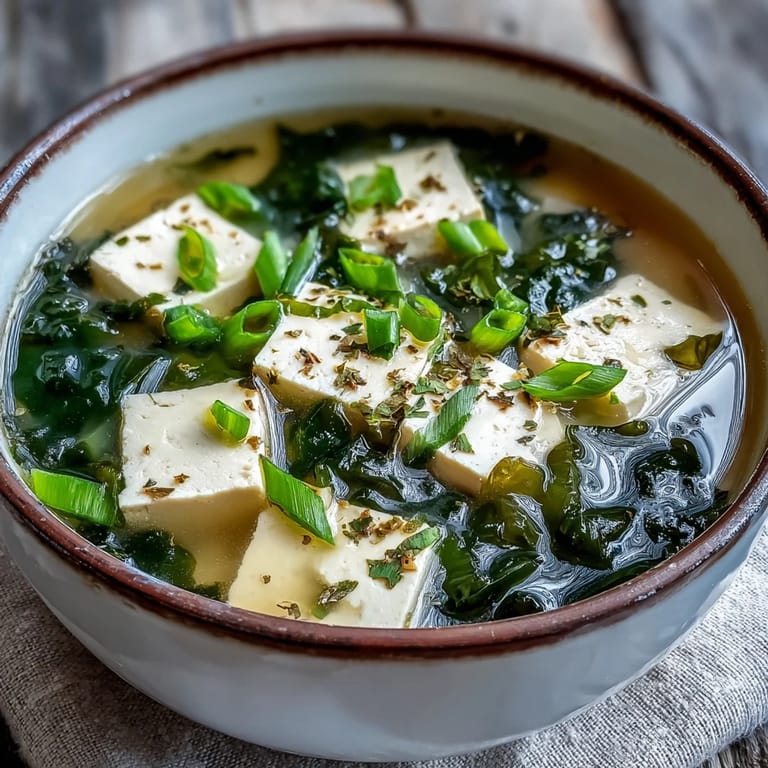
Save Miso Soup With Tofu is a comforting, traditional Japanese soup featuring probiotic-rich miso, silky tofu, and tender seaweed. Light yet nourishing, this classic dish is perfect as a starter or a healthy light meal to warm your spirit.
Save The beauty of this soup lies in its simplicity. By using quality dashi and miso, you create a complex umami profile that highlights the freshness of the scallions and the smooth, custardy nature of the silken tofu.
Ingredients
Tired of Takeout? 🥡
Get 10 meals you can make faster than delivery arrives. Seriously.
One email. No spam. Unsubscribe anytime.
- 4 cups (1 liter) dashi stock (use vegetarian dashi for a plant-based option)
- 3 tablespoons white or yellow miso paste
- 200 g (7 oz) silken tofu, cut into 1/2-inch cubes
- 2 tablespoons dried wakame seaweed
- 2 scallions (spring onions), finely sliced
Instructions
- Step 1
- In a medium saucepan, bring the dashi stock to a gentle simmer over medium heat.
- Step 2
- While the stock is warming, soak the dried wakame seaweed in a small bowl of cold water for 5 minutes, then drain and set aside.
- Step 3
- Place the miso paste in a small bowl. Add a ladleful of hot dashi and whisk until smooth and dissolved.
- Step 4
- Gently add the tofu cubes and soaked wakame to the simmering dashi. Heat for 2–3 minutes until warmed through, being careful not to break the tofu.
- Step 5
- Remove the soup from heat. Stir in the dissolved miso paste (do not boil after adding miso, to preserve probiotics and flavor).
- Step 6
- Ladle into bowls and garnish with sliced scallions. Serve immediately.
Zusatztipps für die Zubereitung
To protect the delicate probiotics and the nuanced flavor of the miso, it is crucial to remove the saucepan from the heat before stirring in the dissolved paste. Avoid boiling the soup once the miso has been added.
Varianten und Anpassungen
For added depth, try mixing white and red miso pastes. You can also incorporate thinly sliced mushrooms or spinach for more variety. For a strictly vegan version, ensure your dashi is prepared from kombu and shiitake rather than bonito flakes.
Serviervorschläge
This Miso Soup With Tofu pairs excellently with a side of warm steamed rice or a fresh, simple green salad to round out your meal.
 Save
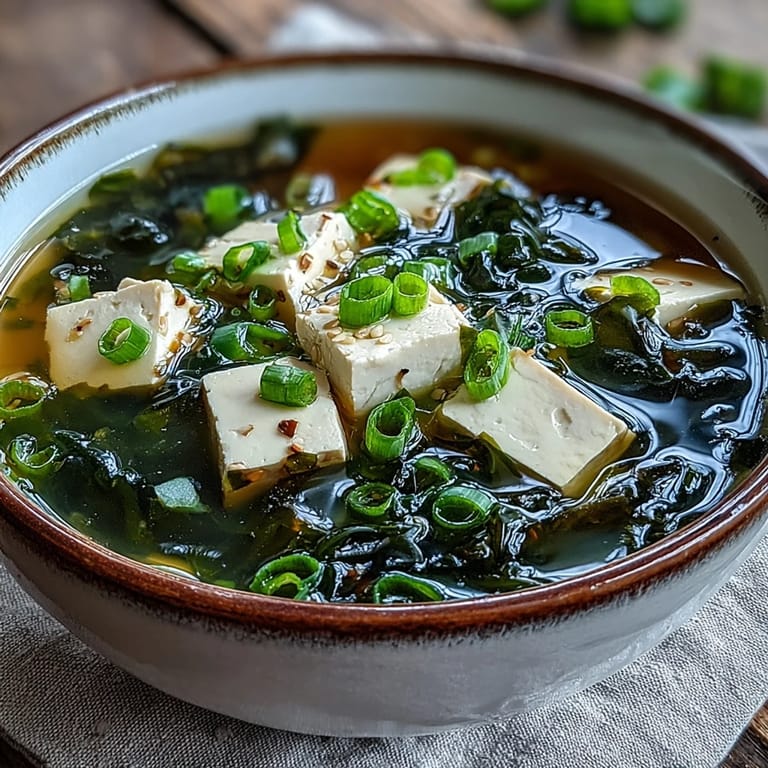
Save Whether enjoyed as a quiet breakfast or a soothing dinner starter, this Miso Soup With Tofu is a nutrient-dense dish that brings a touch of Japanese tradition to your kitchen. With only 70 calories per serving, it is as light as it is flavorful.
Recipe FAQs
- → What type of miso works best?
White miso offers a milder, slightly sweet flavor ideal for beginners. Yellow miso provides a balanced umami taste. Red miso delivers deeper, more intense notes. Many cooks blend white and red varieties for complexity.
- → Can I make this vegan?
Absolutely. Simply use kombu and shiitake-based dashi instead of traditional bonito flakes. Most miso pastes are naturally plant-based, though always verify the ingredient list to ensure no fish-derived additives.
- → Why not boil the miso?
High heat destroys beneficial probiotics and enzymes in fermented miso. Dissolving it separately in warm broth then adding off-heat preserves both living cultures and delicate flavor compounds that boiling would compromise.
- → How long does this keep?
Best enjoyed immediately for optimal texture and flavor. Leftovers can be refrigerated 2-3 days, though tofu may soften and seaweed expand. Reheat gently without boiling to maintain miso's beneficial properties.
- → What vegetables can I add?
Thinly sliced shiitake mushrooms, baby spinach, snow peas, or finely shredded carrots work beautifully. Add hearty vegetables like carrots earlier in simmering, delicate greens like spinach just before serving.
- → Is this gluten-free?
Traditionally prepared dashi contains no gluten, though some commercial dashi powders may include wheat-based additives. Check labels carefully. Pure miso paste made from soybeans, rice, and salt is typically gluten-free.