 Save
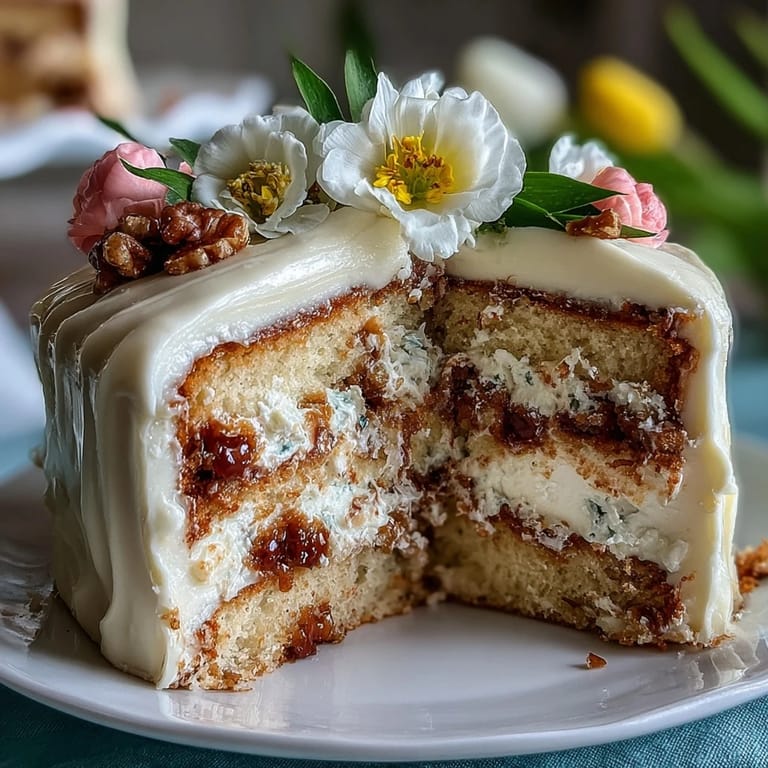
Save My cousin handed me a list of names—twenty kids from her daughter's First Communion class—and asked if I could bake a cake. Not just any cake, but something that felt special enough for a white dress and a gold cross, something that would make little faces light up. I'd never piped flowers before, but standing in my kitchen at midnight the night before, surrounded by buttercream and food coloring, I realized this cake wasn't really about perfect petals. It was about showing up with something made by hand.
What I didn't expect was how the piping became meditative, almost like my hands remembered movements my brain had never learned. A neighbor stopped by while I was working, watched in silence for a minute, then asked quietly if she could try one flower. We spent the next hour together, laughing at wonky leaves and cheering when a rose actually looked like a rose, and that's when I understood why people make cakes for each other.
Ingredients
- All-purpose flour (2 ½ cups): The foundation that keeps this cake tender instead of dense—don't sift before measuring, or you'll end up with a crumbly disappointment.
- Baking powder (2 ½ tsp): This is what gives the cake its gentle lift and cloudlike crumb; skip the old canister in your pantry and buy fresh.
- Salt (½ tsp): A whisper of salt amplifies vanilla and makes people ask what your secret ingredient is.
- Unsalted butter (1 cup, softened): Room temperature is not optional here—cold butter won't cream properly, and you'll lose that airy texture you're after.
- Granulated sugar (2 cups): Beat this with the butter until it looks almost fluffy and pale, which takes longer than you think but is worth every second.
- Eggs (4 large, room temperature): Cold eggs won't blend smoothly into the batter and can make the cake dense; leave them out for an hour before baking.
- Pure vanilla extract (1 tbsp): Use real extract, not the imitation, especially when vanilla is doing most of the flavor work.
- Whole milk (1 cup, room temperature): The alternating method with flour keeps the batter from becoming grainy or overmixed.
- Unsalted butter for buttercream (1 ½ cups, softened): Same rule as before—soft is essential, and salted butter will throw off your balance.
- Powdered sugar (6 cups, sifted): Sifting removes lumps that will show up as grittiness in your buttercream and make piping harder.
- Milk for buttercream (¼ cup): Start with this amount and add more a teaspoon at a time if your buttercream is too stiff.
- Pure vanilla extract (2 tsp): A touch more vanilla than the cake batter makes the buttercream taste like a cloud.
- Food coloring (gel preferred): Gel stays vibrant and won't thin out your buttercream the way liquid coloring does.
Tired of Takeout? 🥡
Get 10 meals you can make faster than delivery arrives. Seriously.
One email. No spam. Unsubscribe anytime.
Instructions
- Set yourself up for success:
- Preheat your oven to 350°F and grease a 9x13-inch pan, then line it with parchment paper so the cake comes out clean. Having everything ready before you start mixing means you won't be panicking when the batter is ready to go in.
- Build your dry ingredients:
- Whisk flour, baking powder, and salt together in a medium bowl and set aside. This ensures the leavening distributes evenly throughout the cake.
- Cream butter and sugar until fluffy:
- Beat softened butter with sugar for about 3 minutes on medium speed until the mixture is pale and nearly doubled in volume. This incorporates air, which is what makes the cake light and tender instead of dense.
- Add eggs slowly and intentionally:
- Add each egg one at a time, waiting for it to blend in before adding the next, then pour in the vanilla extract. Rushing this step creates lumps that bake into little pockets of weirdness.
- Alternate flour and milk:
- Add the flour mixture in three portions, alternating with the milk, starting and ending with flour—so flour, milk, flour, milk, flour. Mix until just combined after each addition; overmixing develops gluten and makes the cake tough.
- Bake with patience:
- Pour batter into your prepared pan, smooth the top gently, and bake for 28–32 minutes until a toothpick inserted in the center comes out clean. The cake will smell buttery and vanilla-sweet and barely golden when it's done.
- Cool completely before frosting:
- Let the cake rest in the pan for 10 minutes, then turn it out onto a wire rack and let it cool all the way down—at least 2 hours, or overnight. Frosting a warm cake is a losing battle.
- Make the buttercream:
- Beat softened butter until creamy, then gradually add sifted powdered sugar, alternating with milk and beating until smooth and fluffy. This takes a few minutes and your arm might hurt, but the texture is worth it.
- Color your flowers:
- Divide the buttercream into small bowls and add gel food coloring a tiny bit at a time, mixing well. Start with less color than you think you need; you can always add more.
- Frost and pipe:
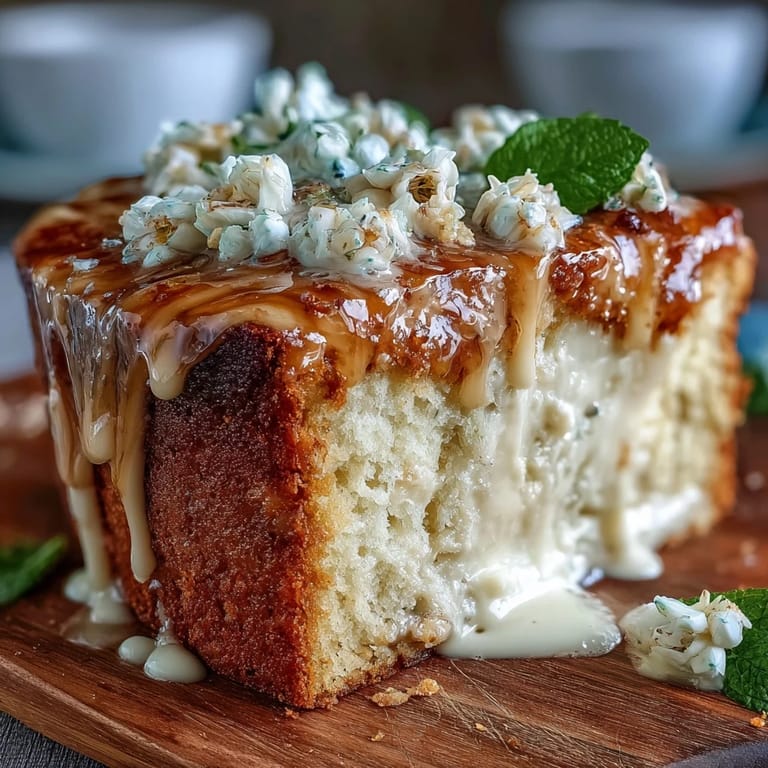
- Spread a generous base layer of plain buttercream over the cooled cake, then fill piping bags with colored buttercream and flower tips. Pipe flowers, leaves, and greenery across the cake, trusting that imperfection is part of the charm.
 Save
Save The cake showed up at the church social hour, and I watched from across the room as a little girl in a white dress pointed at a pink flower and asked her mother if she could have the one near the corner. Her mother cut into it carefully, and when the cake came away with that perfect tender crumb, I felt something settle in my chest. Cake is just cake, but it's also a moment you're saying yes to, a way of saying I made this for you.
Making This Cake Your Own
The vanilla is lovely on its own, but if you want to experiment, add ½ teaspoon of almond extract to the batter for something floral and subtle that people won't be able to name. You could also infuse the milk with a touch of lemon zest before adding it, which brightens the whole cake without overwhelming it. The beauty of this recipe is that it's a canvas; you can dress it up or keep it simple depending on what the moment calls for.
The Decorating Part (Don't Be Afraid)
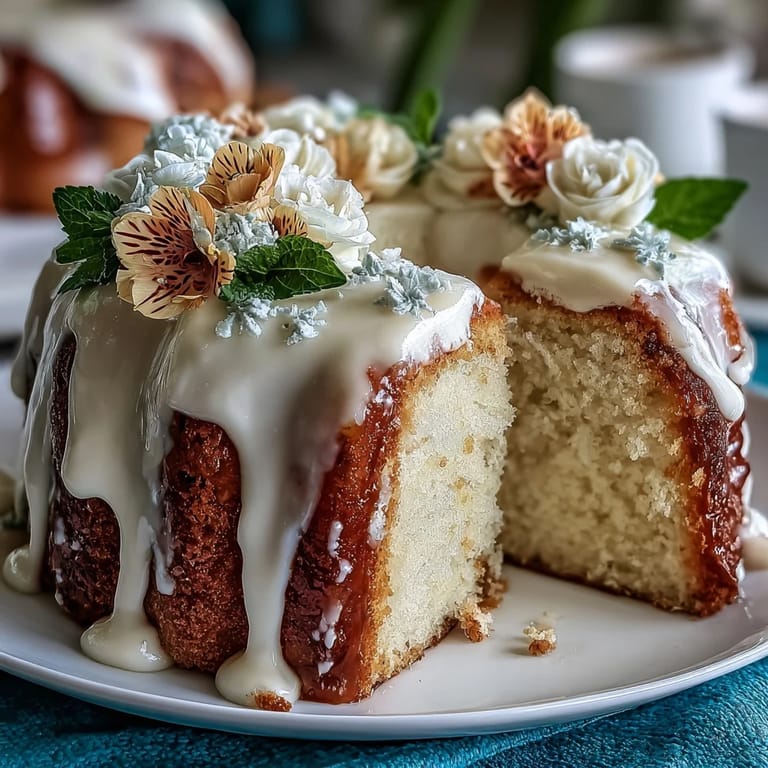
Piping flowers genuinely does get easier after the third or fourth attempt, and no one is examining your cake for technical perfection—they're just happy something beautiful showed up. If you don't have flower tips, round tips work fine; if you don't have a piping bag, a small plastic bag with a corner snipped off does the job. The goal is to make something that feels celebratory, not to win a baking competition.
Storage and Make-Ahead Tips
This cake gets better on the second day as the flavors settle and the crumb actually becomes more moist, so baking it a day ahead is not just allowed, it's encouraged. Keep it covered at room temperature, and it stays fresh and soft for up to three days. If you need to make the buttercream ahead, you can refrigerate it for up to two weeks and bring it back to room temperature before piping.
- Frost and decorate the cake no more than a few hours before serving so the buttercream stays fluffy and the colors stay bright.
- If you're transporting the cake, keep it in a cool car and avoid stacking anything on top—a simple cardboard cake box is your friend.
- Leftover frosted cake stays perfectly fine at room temperature for three days, or you can wrap slices individually and freeze them for up to a month.
 Save
Save A cake for a First Communion is about more than sugar and butter; it's about showing up with something made by your own hands, something that says I see this milestone and I want to be part of it. That's the real magic.
Recipe FAQs
- → What makes this vanilla sheet cake moist?
The addition of whole milk and proper mixing techniques help create a tender, moist crumb in the cake.
- → How do I achieve smooth buttercream for piping?
Beat softened butter until creamy, then gradually add powdered sugar and milk to reach a fluffy, smooth consistency ideal for piping details.
- → Can I prepare the cake ahead of time?
Yes, bake the cake a day before and store it covered at room temperature to maintain freshness before decorating.
- → What tools are needed for decorating the cake?
Use piping bags with flower, leaf, and round tips to create detailed buttercream flower designs and accents.
- → How can I add color to the buttercream flowers?
Mix gel food coloring into separate buttercream portions to create vibrant hues without runny textures.