 Save
Save My kitchen window was cracked open one August afternoon when the smell of overripe tomatoes from the farmers market reminded me I had maybe one day left before they turned. I wasn't planning on soup in that heat, but something about the basil plant on the sill made me think of pairing the two in a way I hadn't before. That's how this recipe was born, not from a plan, but from produce on the edge and a little bit of summer desperation.
I made this for my sister the first cold night of fall after she had been sick for a week. She sat at my table with a blanket around her shoulders and finished two bowls without saying much. When she finally looked up, she just nodded and said that's the one, and I knew I had something worth keeping.
Ingredients
- Olive oil: Use a good one for sautéing the onions because it becomes the base of all the flavor, and you'll taste it if it's stale or bitter.
- Onion: Finely chopped so it melts into the soup and adds sweetness without chunks, which I learned after serving a batch with too large pieces once.
- Garlic cloves: Minced fresh, never jarred, because the sharpness fades into something mellow and almost buttery when cooked right.
- Ripe tomatoes: Fresh is beautiful in summer, but canned whole peeled tomatoes work any other time and sometimes taste even richer.
- Tomato paste: This deepens the color and flavor in a way that feels almost cheating, like a secret umami boost.
- Vegetable broth: Homemade is lovely, but a good quality boxed one does the job without any shame.
- Sugar: Just a teaspoon to balance the acidity, not to make it sweet, and it's the difference between sharp and smooth.
- Salt and black pepper: Season as you go, taste often, and don't be shy because underseasoned tomato soup is a sad thing.
- Heavy cream: Stir it in at the end for that silky richness, or swap it for coconut cream if you want to keep it plant based.
- Fresh basil leaves: The star of the pesto, so use the brightest green leaves you can find and avoid any that are wilting or bruised.
- Pine nuts: Traditional and buttery, though walnuts or cashews work if pine nuts are too pricey or you just prefer them.
- Parmesan cheese: Freshly grated makes the pesto cling together and adds a salty sharpness that pre grated stuff just can't match.
- Extra virgin olive oil: The good stuff here, since it's raw in the pesto and you'll taste every note of it.
Tired of Takeout? 🥡
Get 10 meals you can make faster than delivery arrives. Seriously.
One email. No spam. Unsubscribe anytime.
Instructions
- Start with the aromatics:
- Heat olive oil in a large pot over medium heat and add the finely chopped onion, letting it cook until soft and translucent, about five minutes. You'll know it's ready when the kitchen smells sweet and the onion has lost its bite.
- Wake up the garlic:
- Stir in the minced garlic and cook for just one minute until it's fragrant and starting to turn golden. Don't walk away or it'll burn and turn bitter on you.
- Build the tomato base:
- Add the chopped tomatoes and tomato paste, stirring them into the onion and garlic mixture. Let everything cook together for five minutes, stirring occasionally so nothing sticks to the bottom.
- Simmer it down:
- Pour in the vegetable broth, then add sugar, salt, and pepper. Bring it all to a boil, then lower the heat and let it simmer uncovered for twenty minutes until the tomatoes have broken down and the flavors have melded.
- Make the pesto:
- While the soup is simmering, throw basil, pine nuts, garlic, and Parmesan into a food processor and pulse until finely chopped. Drizzle in the olive oil with the motor running until the pesto is smooth and glossy, then season with a pinch of salt.
- Blend until velvety:
- Once the soup has finished cooking, use an immersion blender right in the pot or carefully transfer it in batches to a countertop blender. Blend until completely smooth with no chunks left behind.
- Finish with cream:
- Stir in the heavy cream and taste the soup, adjusting salt or pepper if needed. Warm it through gently but don't let it boil or the cream might separate.
- Serve with style:
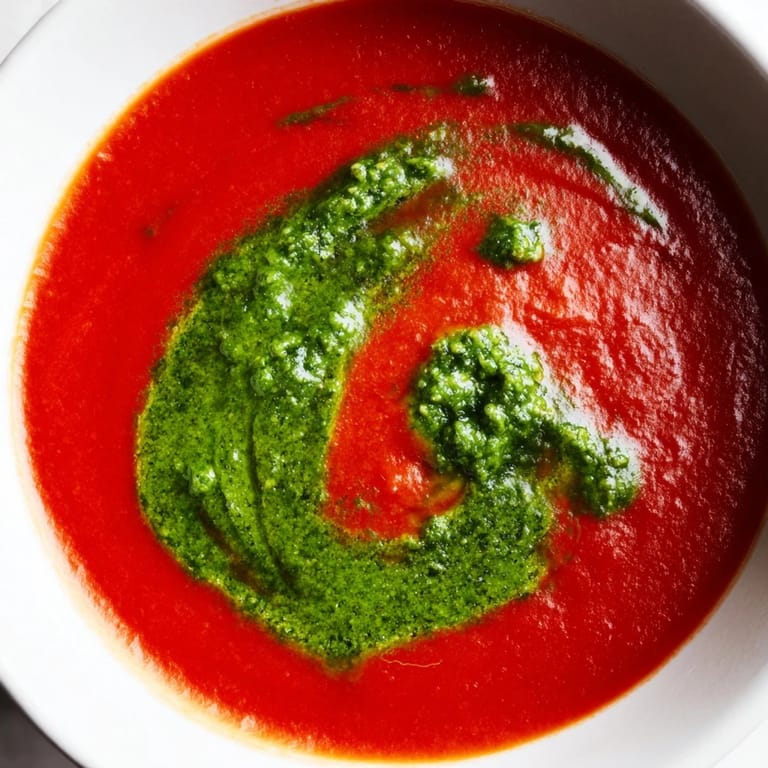
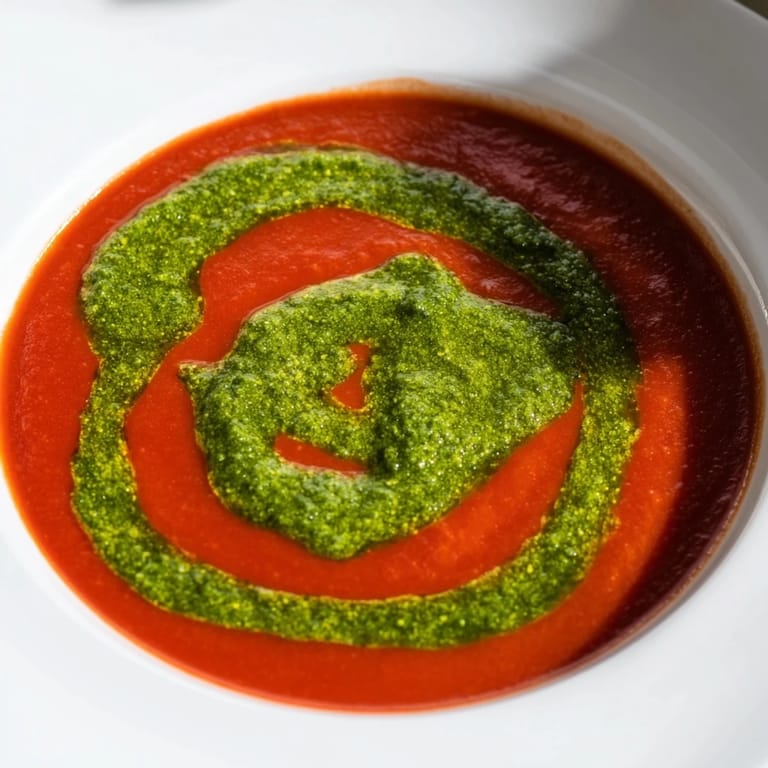
- Ladle the soup into bowls and drizzle each one with a generous swirl of the basil pesto. Serve immediately while it's hot and the pesto is still bright green on top.
 Save
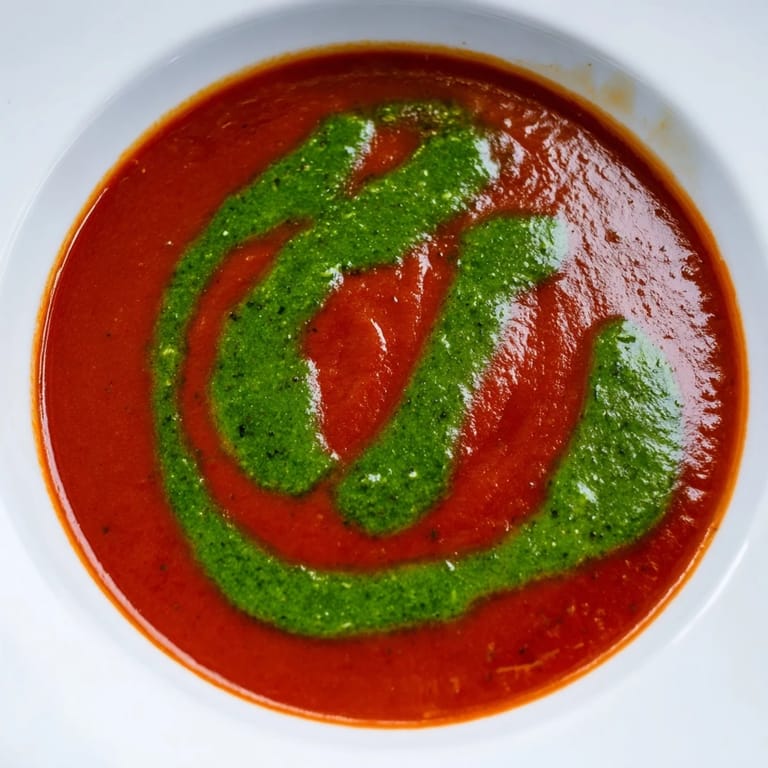
Save There's a moment when you drizzle that green pesto onto the red soup and it just sits there on top like a little piece of art before someone stirs it in. I've watched people pause with their spoons in the air just to look at it, and that's when I remember why I keep making this.
Storing and Reheating
The soup keeps beautifully in the fridge for up to four days in an airtight container, and it actually tastes better the next day once the flavors have had time to settle. I store the pesto separately in a small jar with a thin layer of olive oil on top to keep it from browning. When reheating, do it gently on the stove over low heat and stir often so the cream doesn't split, and only add the pesto right before serving so it stays vibrant and fresh.
Swaps and Substitutions
If you want to make this vegan, coconut cream works surprisingly well in place of heavy cream and adds a subtle sweetness that doesn't fight with the tomato. For the pesto, you can skip the Parmesan entirely or use nutritional yeast for a cheesy flavor without dairy. I've also made this with roasted red peppers blended in when I had them leftover, and it added a smoky sweetness that made it feel like a completely different soup.
Serving Suggestions
This soup begs to be served with something you can dip into it, like crusty sourdough or a gooey grilled cheese sandwich cut into strips. I've also set it out as a starter before a pasta dinner with a handful of fresh basil leaves and a sprinkle of chili flakes on top for anyone who likes a little heat. On nights when I want it to be the whole meal, I'll add a side salad with lemon vinaigrette and call it done.
- Serve with thick slices of toasted baguette rubbed with raw garlic for extra flavor.
- Pair it with a simple arugula salad dressed in olive oil and lemon to keep things light.
- Top with crispy chickpeas or croutons if you want some crunch to contrast the smoothness.
 Save
Save This soup has become my answer to cold days, last minute dinners, and anyone who needs something that tastes like care without a lot of fuss. I hope it finds a spot in your rotation the way it has in mine.
Recipe FAQs
- → Can I use canned tomatoes instead of fresh?
Yes, absolutely. Two 400g cans of whole peeled tomatoes work perfectly as a substitute for fresh tomatoes. The flavor profile remains consistent, and canned options are often more convenient year-round.
- → What's the best way to achieve a smooth texture?
An immersion blender is ideal for pureeing directly in the pot, but a countertop blender works equally well. Blend in batches if using a standard blender, and allow the mixture to cool slightly for safety. Avoid over-blending, which can introduce excess air and create unwanted foam.
- → How do I make this vegan-friendly?
Replace heavy cream with coconut cream or cashew cream for richness. Omit Parmesan from the pesto entirely, or use a quality vegan Parmesan alternative. The nutritional yeast can be added to the pesto for additional umami depth.
- → Can I prepare this ahead of time?
The soup stores beautifully in the refrigerator for up to 4 days in an airtight container. Make the pesto separately and store for 3 days, or freeze pesto in ice cube trays for longer storage. Reheat gently on low heat to preserve creaminess.
- → What are good substitutes for pine nuts?
Walnuts, cashews, or almonds deliver similar texture and richness to the pesto. Adjust quantities slightly based on nut oil content. Toast nuts lightly before blending to enhance their natural flavors and add complexity.
- → How should I adjust seasoning at the end?
Taste the soup after blending and cream addition. Add salt and pepper gradually, as Parmesan in the pesto contributes saltiness. A pinch of sugar can balance acidity if tomatoes are particularly sharp. Fresh basil garnish also enhances overall flavor perception.