 Save
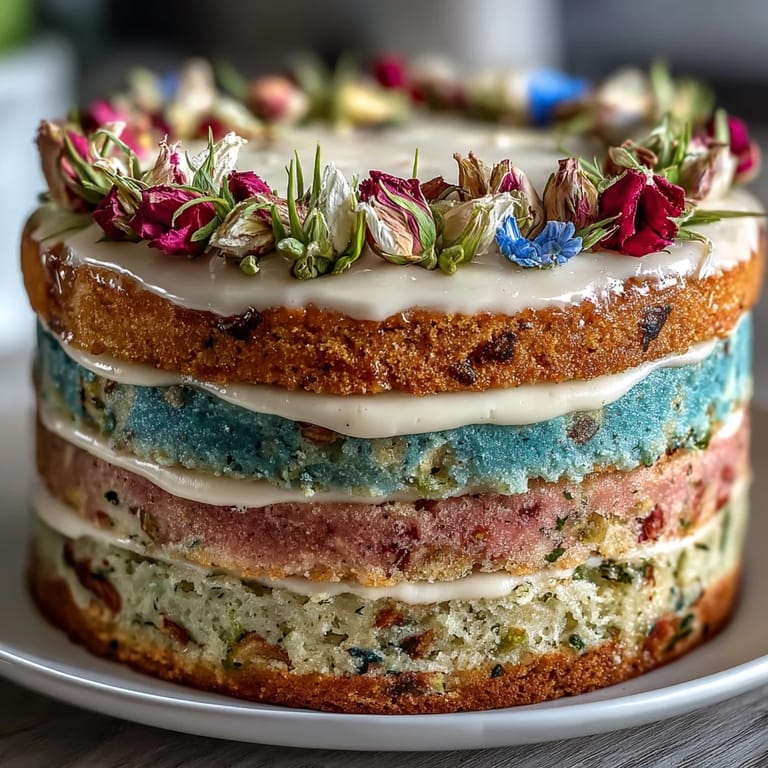
Save The first time pastel hues danced across my kitchen was a breezy spring afternoon when sunlight spilled over the counter and I impulsively decided to bake something that looked as joyful as the season. I’d always admired cakes that looked almost too pretty to eat, but nothing prepares you for the thrill of watching three bowls of batter transform into delicate ombre layers right before your eyes. The gentle swirl of colors made me laugh as I struggled to get just the right shade, splattering pink and blue across my apron. I remember the subtle scent of vanilla mixing with anticipation—from the hum of the mixer to the quiet focus as I arranged edible blooms. Every step felt like a celebration, even before the first slice was served.
A few weeks ago, I made this cake for a friend’s spring party, where laughter echoed and the cake became a centerpiece of conversation. My hands shook a bit as I placed the final blooms atop the buttercream, but the compliment—'it’s almost too beautiful to eat!'—made every minute worthwhile. As we cut into the layers, flour smudges on my cheek and frosting on my fingers suddenly felt like badges of honor. People snapped photos, each slice unveiling a new gradient, and I realized how food can set the tone for celebration. The edible flowers were the finishing touch—a breath of spring on every plate.
Ingredients
- All-purpose flour: I always sift before measuring, which keeps the layers light and airy.
- Baking powder and baking soda: Using both together gives a soft rise and tender crumb.
- Unsalted butter: Letting it reach room temperature makes the batter creamy (don’t rush it).
- Granulated sugar: Cream it thoroughly with butter for fluffy results.
- Eggs: Crack them one by one—whisking in between—ensures a smooth mix without streaks.
- Pure vanilla extract: The deeper the vanilla, the more aromatic the cake.
- Whole milk: Room temperature milk prevents curdling (I learned this the hard way!).
- Gel food coloring: Pastels are achievable without watery batter—just a drop or two at a time.
- Powdered sugar: Sifted to banish lumps for satin-smooth buttercream.
- Edible flowers: Check labels for 'edible'—a must for both safety and taste.
Tired of Takeout? 🥡
Get 10 meals you can make faster than delivery arrives. Seriously.
One email. No spam. Unsubscribe anytime.
Instructions
- Prep the pans and oven:
- Grease and line your three cake pans while the oven preheats—feel the warmth rising and imagine the final masterpiece.
- Mix dry ingredients:
- Combine flour, baking powder, baking soda, and salt in a bowl with a gentle whisk, listening for the soft whoosh as flour settles.
- Cream butter and sugar:
- Beat until pale and fluffy, then add eggs one at a time. Each yolk brings a dash of golden promise, and the vanilla perfumes the air.
- Combine wet and dry:
- Alternately add flour mixture and milk; the batter comes together smoothly and should look just glossy, not overmixed.
- Tint the batter:
- Divide into three bowls and swirl gel colors gently. The pastel shades become a gradient—don't stress if they're imperfect.
- Bake the layers:
- Pour each colored batter into the pans, bake until a toothpick comes out clean, and let the aroma fill the kitchen. Cool on wire racks until no longer warm to touch.
- Prepare the buttercream:
- Beat butter till creamy and add powdered sugar gradually. The frosting should be smooth and cloud-like; tint in hues to match your cake.
- Assemble and frost:
- Level layers, stack with buttercream, and apply a crumb coat. Chill, then frost in blended ombre shades—let your spatula glide, blending gently.
- Top with edible flowers:
- Right before serving, arrange an artful crown of flowers. This step is pure delight—like finishing a painting.
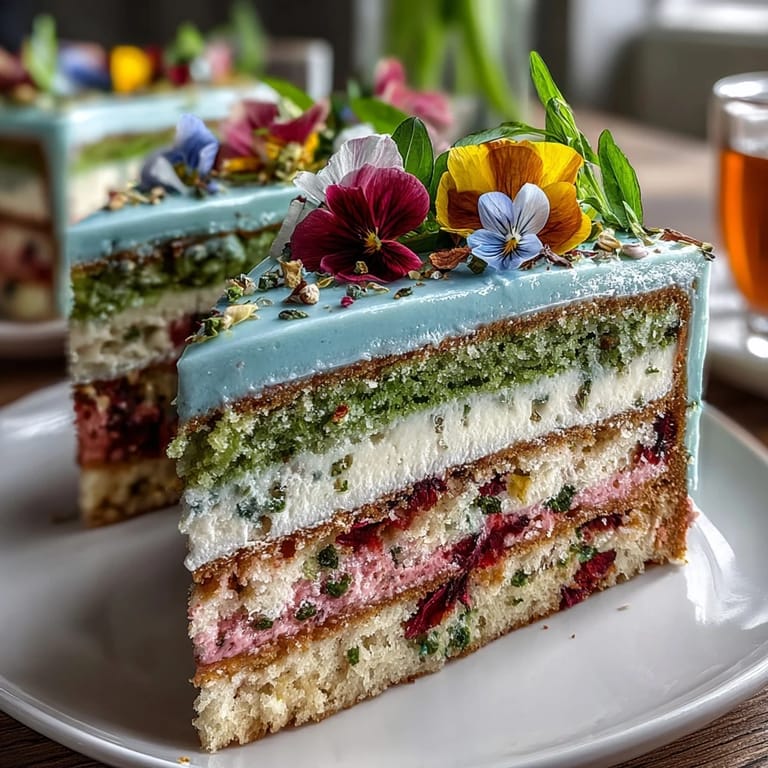 Save
Save The first slice cut was met with a tiny gasp and wide eyes, and for a moment I forgot about measuring cups and timers. We lingered over dessert, sunlight drifting outside, and I realized this cake built memories from both flour and friendship. It turned a regular day into something bright and unforgettable.
Making Ombre Layers Work
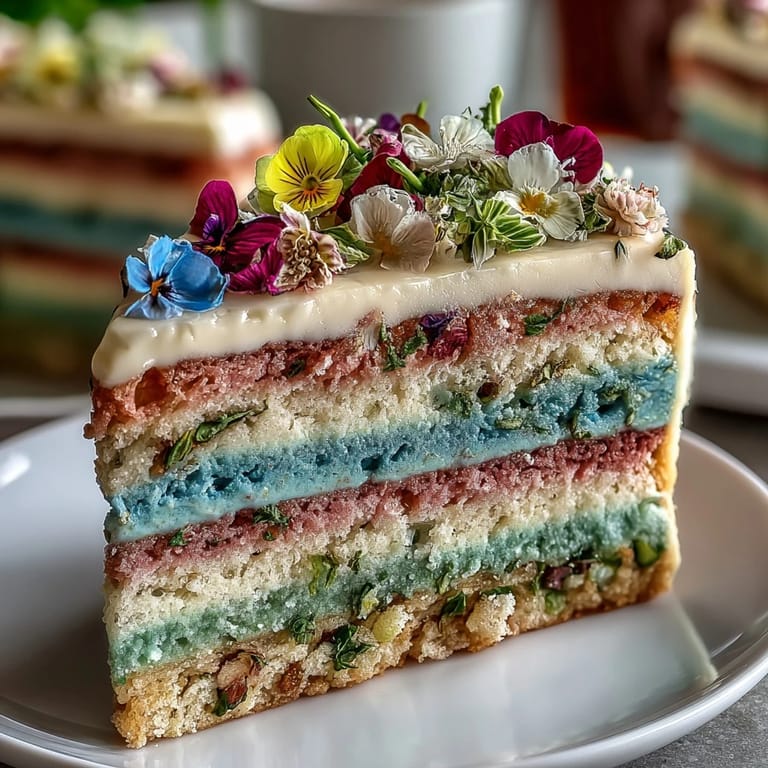
What surprised me most was how forgiving ombre cakes are—the subtle blending hides any uneven coloring. The key is to use gel color sparingly, and mix only until streaks disappear. Don’t worry about precision; you’re aiming for charm, not perfection. Having three bowls lined up felt like painting, with each swirl building anticipation.
Selecting Edible Flowers
Edible flowers add not just beauty but a gentle hint of flavor, and sourcing them feels like a treasure hunt. Always double-check labels for safety, and rinse flowers gently so petals stay crisp. I found pansies and violas worked best—they’re sturdy and vibrant. Try to add them just before serving, so they don’t wilt or lose their appeal.
Frosting and Finishing Touches
Blending buttercream shades is easier with an offset spatula and a cake turntable, but a steady hand and patience are just as effective. Spread pastel frosting in bands, then use gentle sweeps to blend for that cloud-like finish. Let the chilled cake sit for a few minutes before adding flowers; you’ll notice petals settle perfectly. Sometimes I tuck in extra blooms around the base for a little drama.
- If your buttercream feels stiff, add milk a teaspoon at a time.
- Keep the cake chilled until just before serving for best texture.
- Don’t be afraid of imperfections—they add character and charm!
 Save
Save I hope your kitchen fills with color, laughter, and a hint of spring’s promise. Every bite invites celebration, and every slice is a reason to gather.
Recipe FAQs
- → How do you achieve the ombre effect?
Divide the batter and frosting into portions, tint each gently with pastel gel coloring, and layer or blend to create a gradient effect.
- → What edible flowers are suitable for topping?
Pansies, violas, roses, and chamomile are ideal. Always use organic, food-safe blooms to ensure they are edible and safe.
- → Can this cake be made vegan?
Yes, substitute with plant-based butter and milk, and use egg replacers to adapt for a vegan-friendly version.
- → What tools are recommended for assembly?
Round cake pans, electric mixer, mixing bowls, spatulas, wire rack, and a cake turntable help achieve smooth layers and frosting.
- → How should the cake be stored?
Keep refrigerated due to flowers and buttercream. Cover loosely and consume within 2–3 days for best texture and freshness.
- → Are there common allergens present?
Contains wheat, eggs, and dairy. Edible flowers may also trigger allergies, so confirm suitability for guests.